
9 Beautiful Ornamental Grasses That Make the Fall Garden Come Alive
Flowers tend to get most of the attention in the garden, but as summer begins to wind down, ornamental grasses really start to shine. Their graceful foliage, feathery plumes, interesting seed heads, and warm autumn colors add movement and texture at a time when many flowering plants are beginning to fade.
Ornamental grasses are also wonderfully versatile. Some make dramatic focal points, while others soften walkways, spill over garden edges, or mingle beautifully with late-blooming perennials. And when the sun gets lower in the sky, those wispy seed heads can practically glow. Here are nine beautiful ornamental grasses worth considering for your garden.
1. Autumn Moor Grass
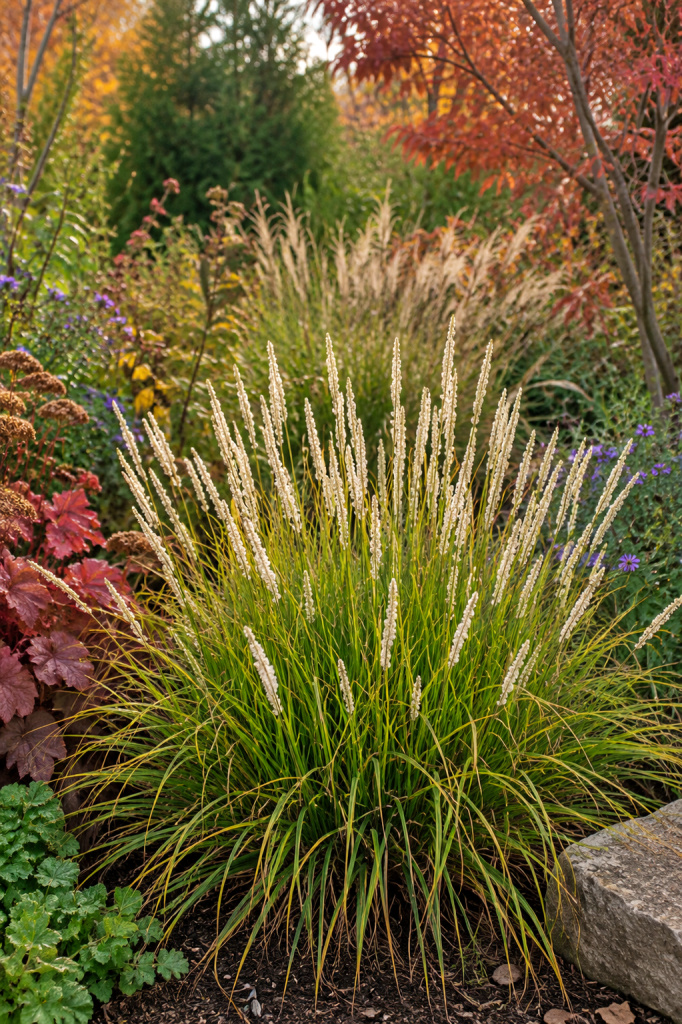
Autumn moor grass (Sesleria autumnalis) forms a tidy mound of bright green foliage topped with slender, creamy-white flower spikes. Its relatively compact habit makes it a lovely choice for adding texture without overwhelming nearby perennials. This is a particularly nice smaller grass for gardeners who don’t want something that takes over a bed.
Height: 12–18 inches; flower stems can reach about 18–24 inches
Hardiness: USDA Zones 5–8
Light: Full sun to partial shade
2. Fountain Grass
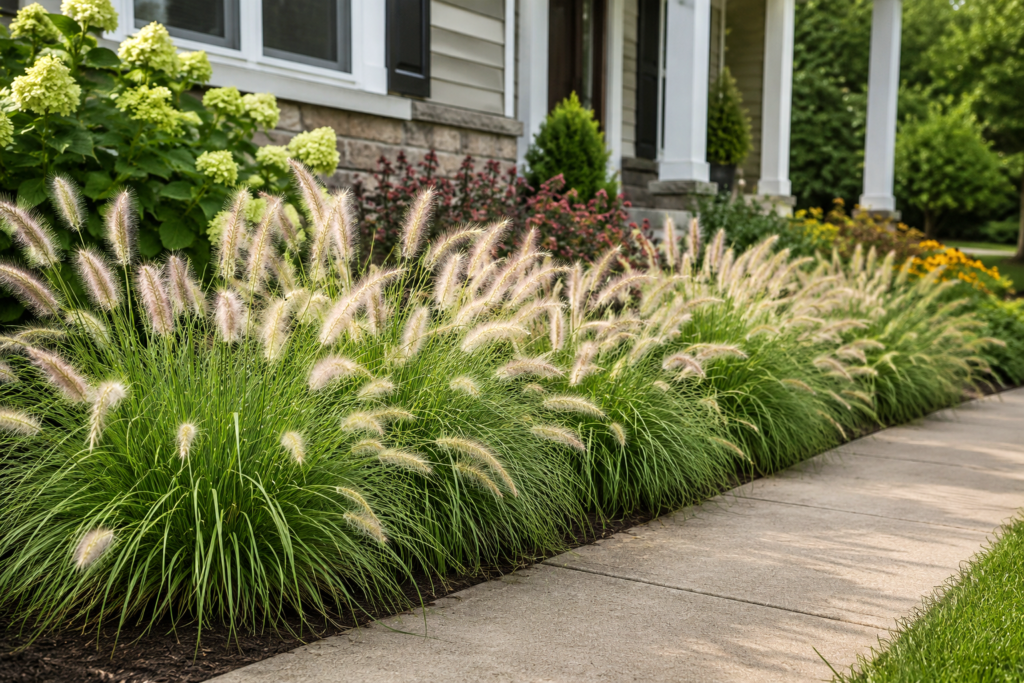
It’s easy to see how fountain grass (Pennisetum) earned its name. The arching foliage and soft, bottlebrush-like plumes create a graceful fountain shape that looks especially beautiful planted in groups along a walkway or garden border. This is one of my favorite ornamental grasses. The size varies quite a bit by cultivar, with compact varieties available for smaller gardens.
Height: 2½–5 feet, depending on variety
Hardiness: USDA Zones 6–9; some cultivars are hardy to Zone 5
Light: Full sun; tolerates partial sun
3. Indiangrass
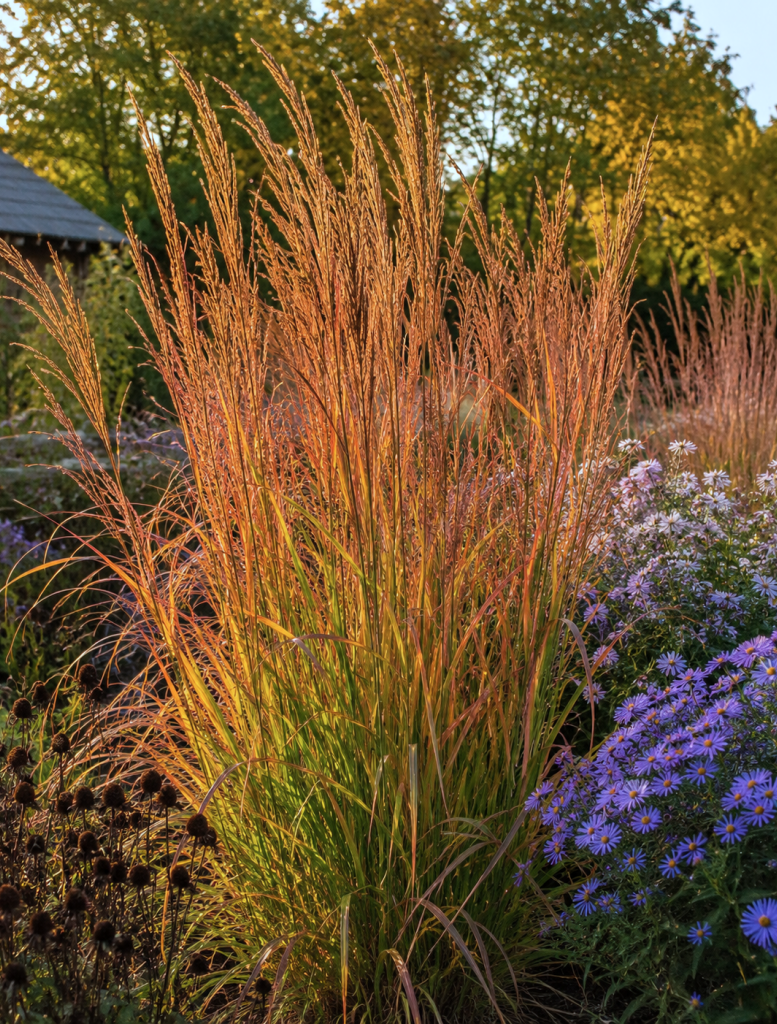
Native Indiangrass (Sorghastrum nutans) becomes especially striking as the season progresses, when its tall stems and flower heads take on beautiful shades of gold, bronze, and copper. Backlit by the late-afternoon autumn sun, it can become one of the most dramatic plants in your garden. Its height makes Indiangrass a great choice for the middle or back of a perennial border or naturalistic planting.
Height: 3–5 feet; some cultivars reach 6 feet
Hardiness: USDA Zones 4–9
Light: Full sun
4. Japanese Forest Grass
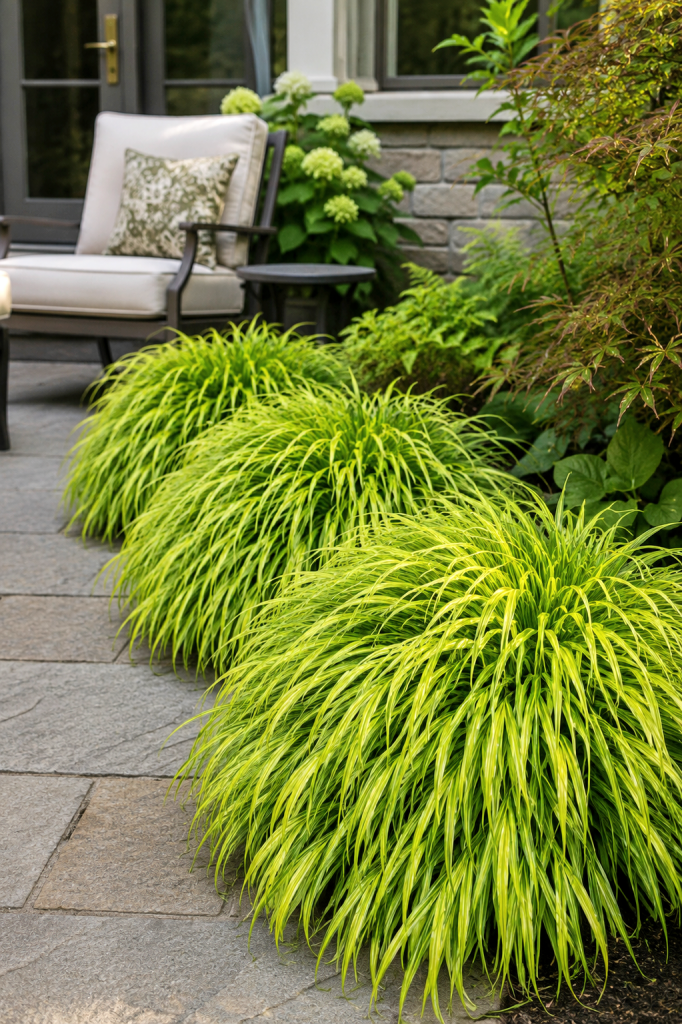
For a softer look, Japanese forest grass (Hakonechloa macra) creates flowing mounds of slender, cascading foliage. It’s particularly beautiful along a shaded path or patio, where softens the edges of stone and hardscape. This is one of the shortest grasses on the list and one of the best choices for shady areas and along paths.
Height: 1–1½ feet
Hardiness: USDA Zones 5–9
Light: Partial shade to shade; protect from hot afternoon sun
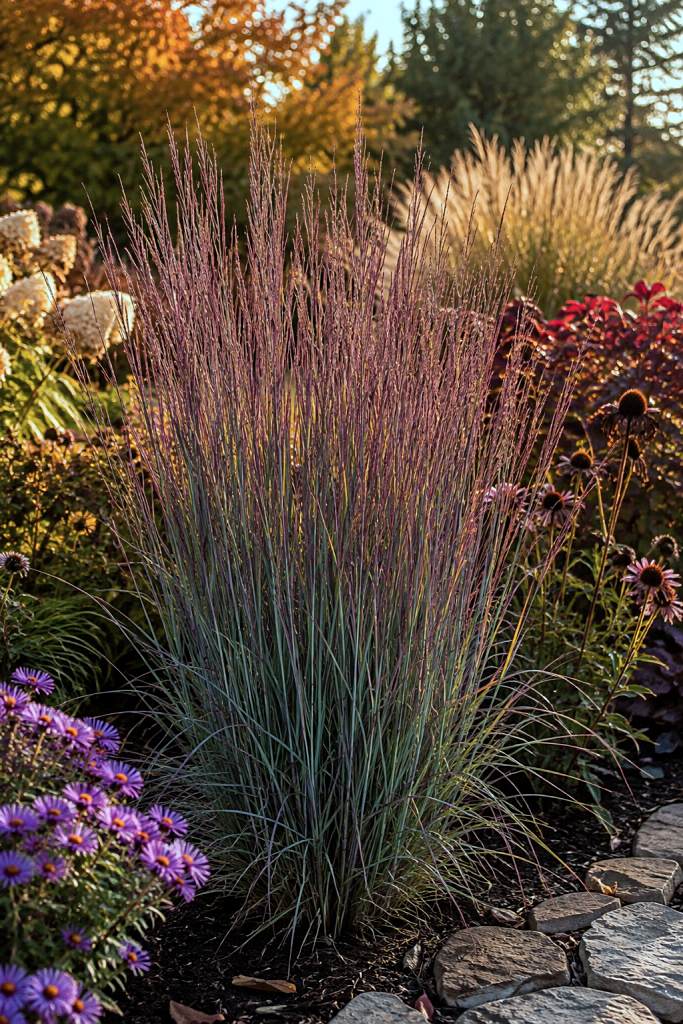
5. Little Bluestem
Little bluestem (Schizachyrium scoparium) offers more than just texture—its blue-green summer foliage gradually develops gorgeous reddish-purple, copper, and burgundy tones in fall. Its upright shape also makes a wonderful vertical accent among asters, coneflowers, sedum, and other fall favorites. Its manageable height and upright form make it easy to tuck among flowering perennials without overwhelming them.
Height: 2–4 feet
Hardiness: USDA Zones 3–9
Light: Full sun
6. Northern Sea Oats
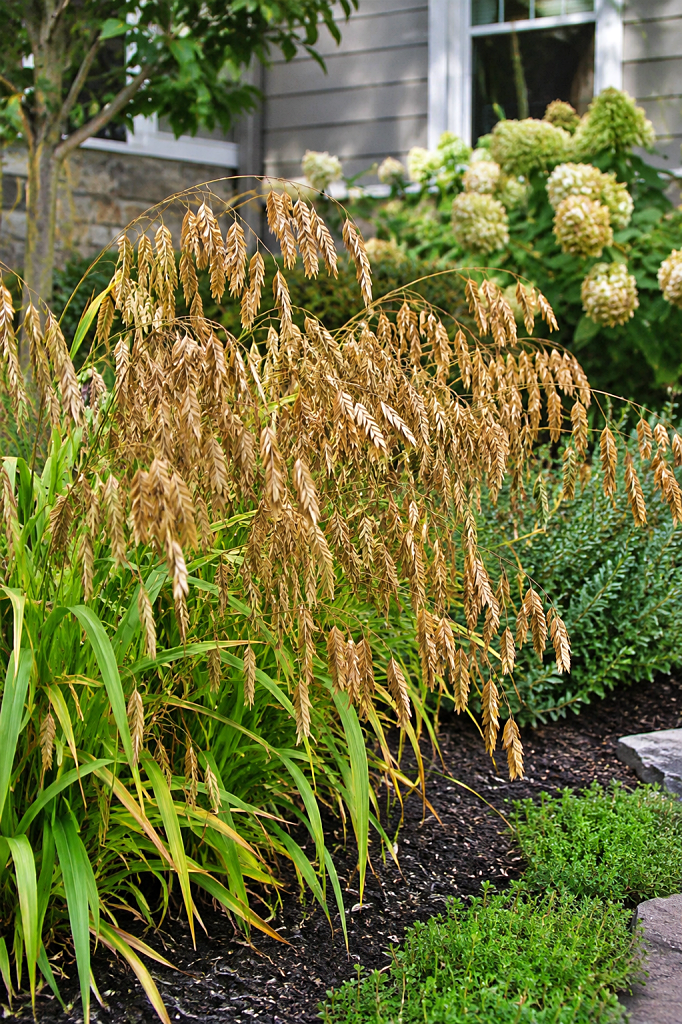
The dangling, oat-like seed heads of Northern sea oats (Chasmanthium latifolium) are what make this native grass so distinctive. As the season changes, the seed heads mature from green to warm tan and bronze, adding movement and an almost delicate, decorative quality to the garden. Northern sea oats is especially useful because it’s more tolerant of shade than many ornamental grasses.
Height: 2–5 feet
Hardiness: USDA Zones 3–8
Light: Partial shade is ideal; tolerates sun and considerable shade
7. Pampas Grass
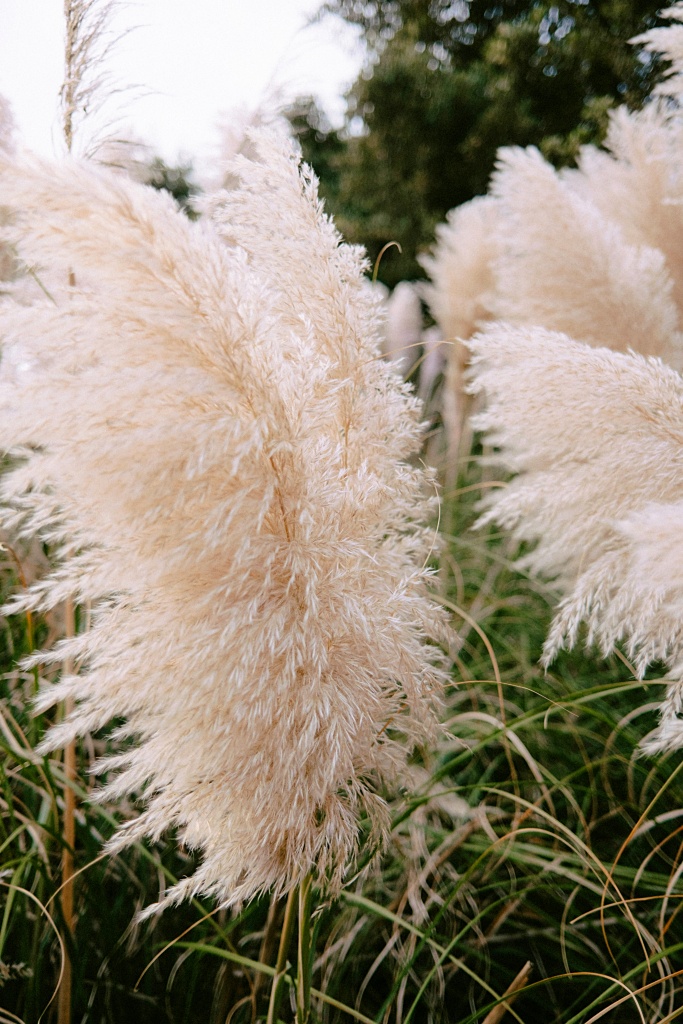
Few ornamental grasses make a statement quite like pampas grass (Cortaderia selloana), with its enormous clumps of arching foliage and tall, fluffy plumes. It’s a showstopper when given plenty of room, although gardeners in colder climates should check hardiness carefully before planting since many varieties aren’t reliably winter hardy. True pampas grass generally isn’t reliably hardy in my area and is also considered invasive in some parts of the U.S. But it sure is impressive.
Height: Typically 6–10+ feet for the species, although smaller cultivars are available
Hardiness: Generally USDA Zones 8–10
Light: Full sun; tolerates partial shade
8. Prairie Dropseed
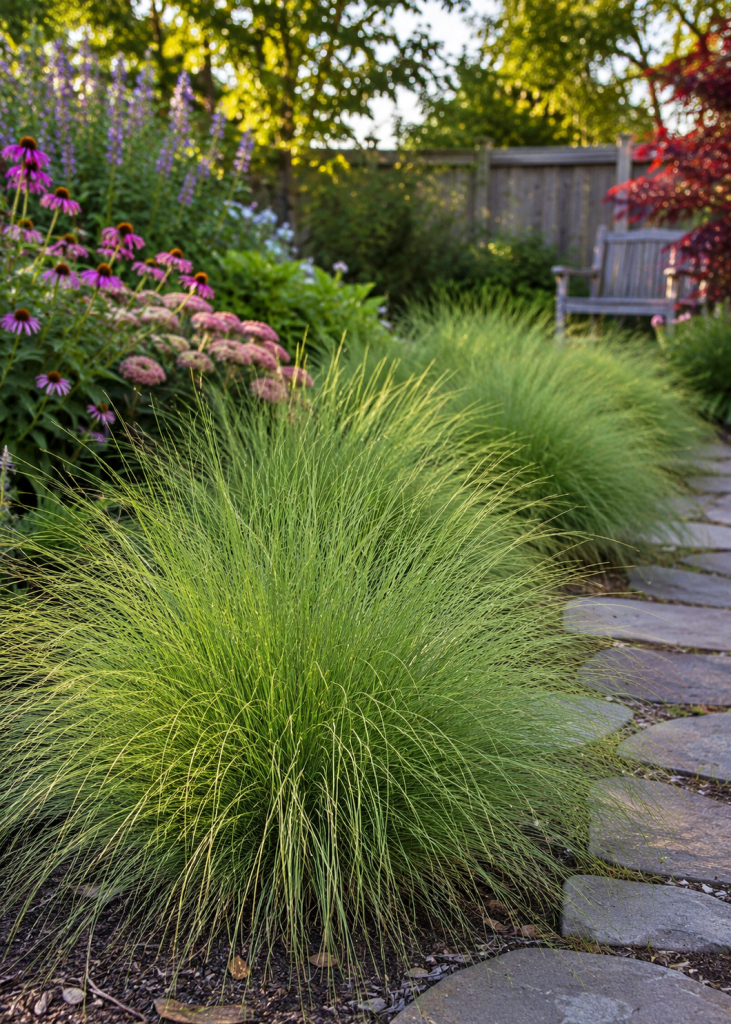
Prairie dropseed (Sporobolus heterolepis) has an airy, almost cloudlike appearance that makes it beautiful along paths and toward the front of a perennial border. This native grass forms neat, rounded clumps and develops lovely golden and orange tones as autumn arrives. Its relatively compact size makes this native grass especially versatile for home landscapes, including along paths and toward the front of borders.
Height: 2–3 feet when flowering
Hardiness: USDA Zones 3–9
Light: Full sun; tolerates some partial shade, but performs best in sun
9. Switchgrass
Switchgrass (Panicum virgatum) is another North American native that provides months of interest. Its upright blue-green foliage and delicate flower panicles take on shades of red, burgundy, purple, and gold in fall, giving the garden color without relying on flowers. Switchgrass is a great choice when you want more height and vertical structure without the massive footprint of something like pampas grass.
Height: About 3–6 feet, depending on cultivar
Hardiness: Commonly USDA Zones 4–9; some cultivars are listed for Zones 5–9
Light: Full sun; tolerates some partial shade
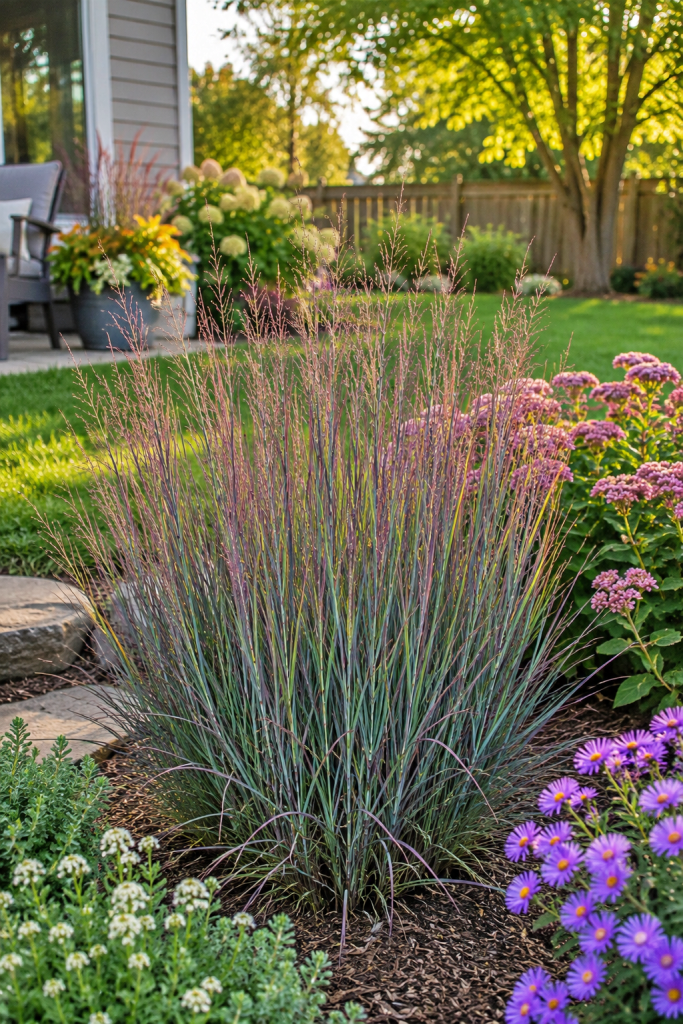
Why Ornamental Grasses Are So Beautiful in Fall
One of the best things about ornamental grasses is that their season doesn’t end when summer does. In many cases, that’s when the show is just beginning.
Mix grasses with fall-blooming asters, sedum, coneflowers, goldenrod, hydrangeas, and shrubs with colorful foliage, and the garden suddenly has another layer of texture and movement. Leave many of the dried grasses standing through winter, and they’ll continue adding structure, particularly when their seed heads are dusted with frost or snow.
If your garden seems to lose some of its personality once the summer flowers fade, adding a few well-placed ornamental grasses may be just what it needs.

I have a shenandoah switch grass which I love but, would really like some other varieties to go with it, so thanks for this list.